

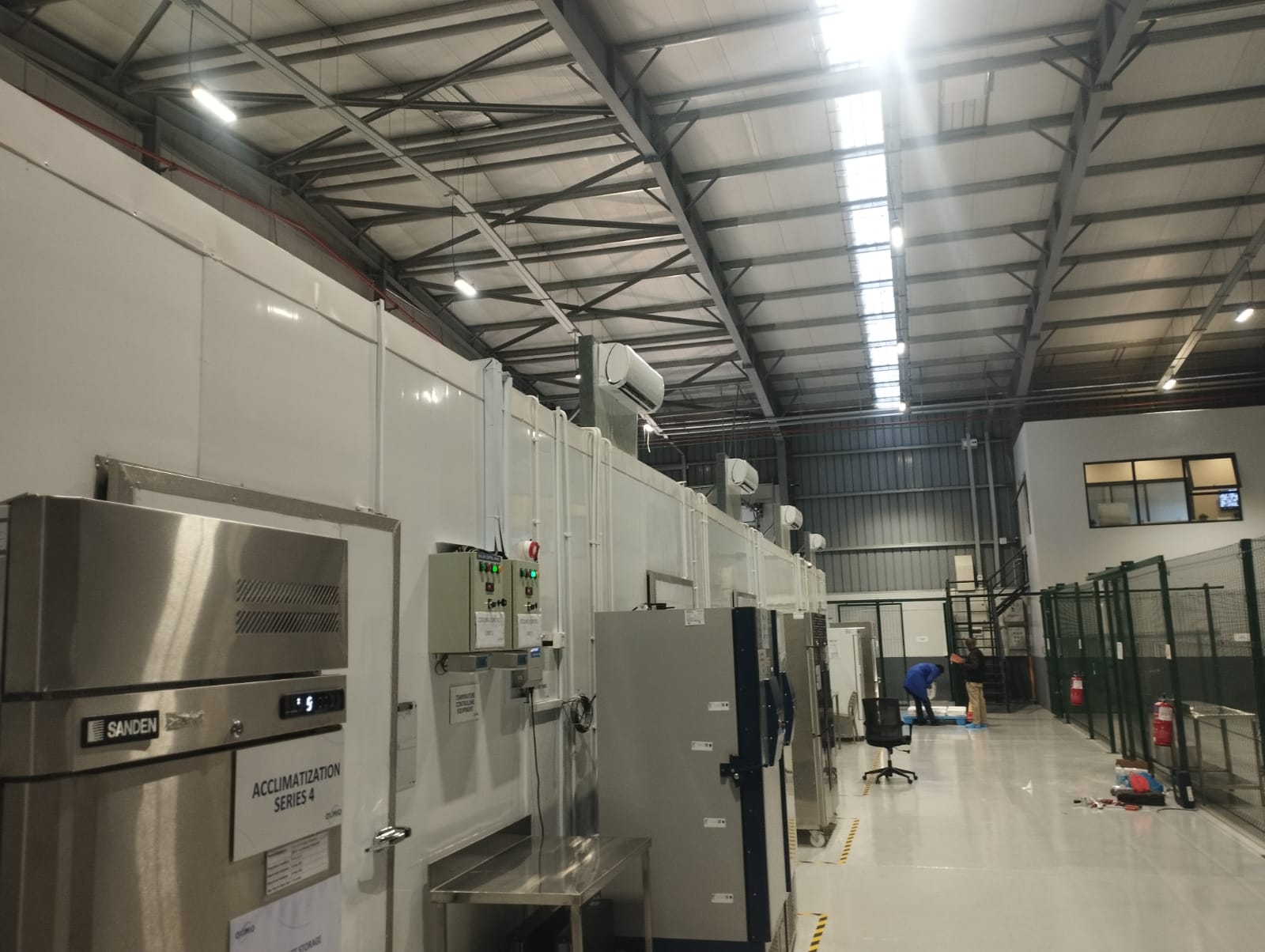
Cold Room Power Consumption and Energy Efficiency
High cold room power consumption impacts profitability. Find out how to tackle energy efficiency challenges in cold storage management
Cold rooms are among the highest energy consumers in a facility. As electricity prices continue to rise and sustainability becomes more important, reducing energy costs in cold room operations has become a top priority.
By implementing best practices in design, equipment selection, maintenance, and day-to-day operations, businesses can significantly reduce energy expenditures while maintaining optimal temperature and humidity conditions.
This article explores strategies to minimize energy costs in cold room operations without compromising performance or product integrity.
1. Optimize Insulation and Building Envelope
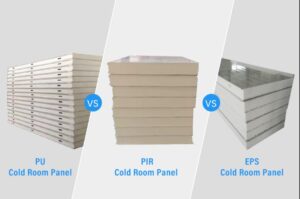
1.1 High-Performance Insulation Materials
- Rigid Foam Panels: Polyurethane (PUR) and polyisocyanurate (PIR) panels deliver R-values of R-6 to R-7 per inch, reducing conductive heat transfer.
- Vacuum Insulated Panels (VIPs): Although more expensive, VIPs can achieve R-values above R-25 in very thin profiles, ideal for retrofit applications where floor and wall thickness is limited.
- Extruded Polystyrene (XPS): With an R-value of about R-5 per inch and inherent moisture resistance, XPS is well suited for floors or below-ground installations.
1.2 Minimize Thermal Bridging
- Thermal Breaks: Use stainless-steel fasteners with insulating sleeves to attach panels, reducing metal conduction.
- Continuous Insulation: Ensure insulation layers remain uninterrupted around corners and penetrations; seal gaps around piping, wiring, and door frames with closed-cell spray foam.
1.3 Proper Sealing and Vapor Barriers
- Sealant and Tapes: Apply specialized cold-room sealants and vapor barrier tapes at panel joints and penetrations.
- Moisture Management: A well-installed vapor barrier (e.g., polyethylene film) prevents condensation within wall cavities, avoiding insulation degradation and mold growth that compromise R-value.
2. Select High-Efficiency Refrigeration Equipment
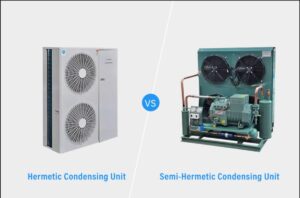
2.1 Variable Speed Compressors (Inverter Technology)
- Adaptive Operation: Inverter-driven compressors modulate capacity based on real-time cooling demand rather than cycling on/off at full load, which reduces electrical spikes and improves part-load efficiency by up to 20–30 %.
- Extended Operating Range: These compressors operate efficiently even under low ambient temperatures, reducing energy consumption during milder seasons.
2.2 Efficient Condensing Units
- EC Fans: Electronically commutated (EC) condenser fans draw significantly less power than traditional AC fans and deliver better airflow control.
- Microchannel Condensers: By using smaller refrigerant channels and higher heat-transfer coefficients, these coils achieve up to 15 % lower condensing pressures compared to conventional fin-and-tube designs.
2.3 Optimize Refrigerant Selection
- Lower GWP Refrigerants: Modern HFO blends (e.g., R-448A, R-449A) can offer efficiencies comparable to or exceeding R-404A while reducing global warming potential.
- Cascade or Two-Stage Systems: For ultra-low-temperature applications, two-stage systems reduce lift on each compressor stage, improving coefficient of performance (COP).
The most common reasons for excessive power consumption include:
1. Door & Seal Failures
- Worn Gaskets: Cracked or misaligned door seals allow warm outside air and moisture to leak continuously into the cold room.
- Propping Doors Open: Every minute the door stays open forces the compressor to run much longer to remove the newly introduced warm air.
- Faulty Closers: Broken hinges or automatic door closers that do not shut properly cause massive thermal losses
2. Equipment & Mechanical Issues
- Frost & Ice Build-up: Heavy ice on the evaporator coils acts as an insulator, blocking proper airflow and heat exchange. The system has to work twice as hard to reach the set temperature.
- Clogged Filters & Coils: Dust and debris covering the condenser or evaporator coils prevent efficient heat rejection.
- Low Refrigerant: Leaking refrigerant lowers the system’s cooling capacity, forcing the compressor to run continuously.
- Worn Compressor: An old or failing compressor draws more electricity to achieve the same cooling effect
3. Operational & Design Flaws
- Poor Airflow: Stacking products too tightly or blocking the fan’s evaporator coils obstructs the circulation of cold air, forcing the system to work harder to cool the room evenly.
- Loading Warm Products: Placing hot or warm goods into the cold room requires the refrigeration unit to pull out that heat, causing a massive power spike. Pre-cooling products before storage is always more efficient.
- Inadequate Insulation: Insulation panels can degrade or absorb moisture over time, losing their thermal resistance. This transfers outside heat into the room much faster.
- Outdated Lighting: Older incandescent or fluorescent bulbs generate significant heat, directly increasing the load on the refrigeration system
How to Fix and Optimize
- Seal & Protect: Check door gaskets regularly using a piece of paper to see if it pulls out easily (if it does, the seal is loose). Consider installing strip curtains or an air curtain to limit cold air loss when the door is opened.
- Routine Maintenance: Keep the condenser and evaporator coils clean, defrost coils when ice builds up, and routinely check for refrigerant leaks.
- Upgrade to LEDs: Replace old lighting with commercial LED fixtures to cut down on ancillary heat and lighting costs.
- Organize Properly: Leave space between stored items to allow air to circulate freely and avoid overfilling the unit
Recent Comments