

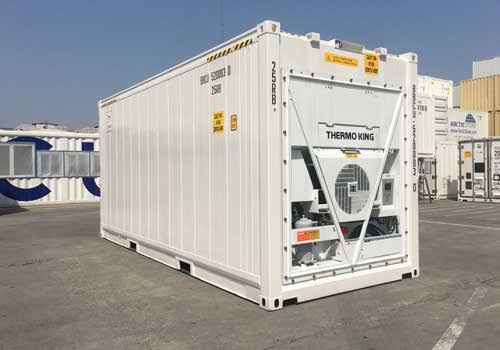
Reefer or Building a Cold Room? Which One Should You Choose?
When you need reliable cold storage in Kenya, one of the most important decisions is choosing the right type of facility. Should you buy a reefer container, or should you build a cold room?
Both options can provide temperature-controlled storage. However, the right choice depends on your storage capacity, available space, budget, temperature requirements, energy consumption and long-term business plans.
At Cold Room Installation Kenya, we help businesses choose and install refrigeration systems suited to their specific requirements. In this guide, we compare reefer containers and purpose-built cold rooms to help you make an informed decision.
What Is a Reefer Container?
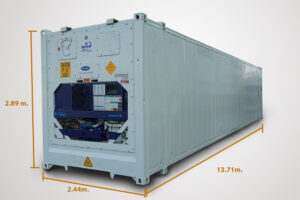
A reefer container is an insulated shipping container fitted with a refrigeration unit. Reefer containers are commonly used to transport and temporarily store temperature-sensitive products such as meat, fish, fruits, vegetables, dairy products and pharmaceuticals.
They are available in different sizes, with 20-foot and 40-foot reefers being common options.
One of the main advantages of a reefer is that it is ready-made. Once a suitable unit is available and the electrical supply is connected, it can be put into operation relatively quickly.
What Is a Cold Room?
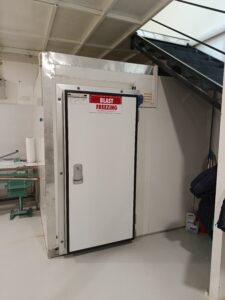
A cold room is a purpose-built insulated room designed specifically for temperature-controlled storage. It is normally constructed using insulated panels, refrigeration equipment, doors, lighting and temperature-control systems.
Cold rooms can be designed for different applications, including:
- Chilled storage at approximately 0°C to 5°C
- Freezer storage below -18°C
- Meat and fish storage
- Dairy and food storage
- Fruit and vegetable storage
- Pharmaceutical and medical storage
- Flower and horticultural products
- Restaurant and hotel storage
Unlike a standard reefer, a cold room can be designed around the exact space and capacity requirements of your business.
Reefer vs Cold Room: Which Is Better?
There is no single answer for every business. A reefer may be the better option for a small operation, temporary storage or a business that needs mobility.
On the other hand, a purpose-built cold room is generally more suitable when you need larger storage capacity, better space utilisation and a permanent refrigeration facility.
Here are the main factors to consider.
1. Initial Cost
The initial investment is an important consideration when choosing between a reefer and a cold room.
A reefer container can be attractive because the insulated structure and refrigeration equipment are already integrated. You do not need to construct a separate insulated building.
However, the purchase price of a reefer can vary significantly depending on its size, age, condition and refrigeration system.
A cold room requires a larger installation process. The project may include insulated panels, refrigeration equipment, doors, flooring, electrical works, drainage and installation.
Therefore, the initial cost can be higher, particularly for a large or highly customised cold room.
However, the long-term value should also be considered rather than looking at the purchase price alone.
2. Storage Capacity
Storage capacity is another major difference.
A reefer has a fixed internal size. For example, a 20-foot reefer cannot easily be expanded when your business grows.
A cold room, however, can be designed according to your required dimensions and storage capacity.
If you need to store a large volume of products or accommodate pallet racking, a purpose-built cold room may provide a better solution.
Choose a cold room if your business requires scalable or high-capacity cold storage.
3. Space Utilisation
Reefers have standard external dimensions because they are designed around shipping-container specifications.
This makes them easy to transport but can limit how efficiently they fit into your available site.
A cold room can be designed to make better use of an existing warehouse, building or dedicated space.
For businesses with limited or irregularly shaped space, a custom-designed cold room can therefore be more practical.
4. Mobility
This is where reefer containers have a significant advantage.
A reefer can be moved from one location to another when required. This can be useful for businesses operating temporary sites, farms, construction projects, events or seasonal operations.
A conventional cold room is generally a permanent installation.
If you expect your storage location to change, a reefer may be the more practical option.
5. Temperature Requirements
Both reefers and cold rooms can provide chilled and frozen storage. However, the refrigeration system must be correctly selected for the required temperature.
For example, a business storing fresh produce may require chilled storage, while frozen meat may require a freezer room operating at approximately -18°C or lower.
For specialised applications, such as pharmaceutical storage, temperature stability, monitoring and backup systems become particularly important.
A purpose-built cold room can be engineered around the exact temperature and operating conditions required by your business.
6. Energy Efficiency
Energy consumption is an important consideration because refrigeration equipment can operate continuously.
A cold room can be designed with appropriate insulation thickness, refrigeration capacity, doors and controls to improve energy efficiency.
The condition of the insulation and refrigeration equipment also has a major impact on energy consumption.
For either option, regular maintenance is essential. Dirty condenser coils, damaged door seals, poor insulation and incorrectly operating refrigeration equipment can increase electricity consumption.
If you are considering solar-powered cold storage, the refrigeration load should be calculated carefully before selecting the battery and solar system.
7. Maintenance and Repairs
Both reefers and cold rooms require regular maintenance.
A reefer has an integrated refrigeration system, meaning the refrigeration unit is usually mounted directly onto the container. Access for repairs can depend on the specific reefer design and equipment.
A cold room normally has a separate condensing unit and evaporator. This configuration can make component replacement and servicing more straightforward, depending on the installation.
Regular maintenance should include:
- Cleaning condenser and evaporator coils
- Checking refrigerant pressures
- Inspecting electrical connections
- Checking door seals
- Inspecting evaporator fans
- Checking drainage
- Monitoring operating temperatures
- Inspecting insulation and panels
- Checking refrigeration controls
8. Expansion and Future Growth
Think about where your business will be in three to five years.
If you expect your storage requirements to increase, building a cold room can provide greater flexibility.
A cold room can be designed with additional capacity or, depending on the site and design, allow for future expansion.
With a reefer, increasing capacity usually means purchasing another container.
For a growing food processing, hospitality, pharmaceutical, agricultural or distribution business, this is an important consideration.
Reefer or Cold Room: Quick Comparison
| Feature | Reefer Container | Purpose-Built Cold Room |
|---|---|---|
| Initial setup | Generally quicker | Requires installation |
| Mobility | Excellent | Limited |
| Customisation | Limited | High |
| Storage capacity | Fixed | Customisable |
| Space utilisation | Standard dimensions | Designed for available space |
| Expansion | Add another reefer | Can be designed for expansion |
| Installation time | Usually shorter | Depends on size and complexity |
| Long-term flexibility | Moderate | High |
| Suitable for permanent storage | Yes | Excellent |
| Suitable for temporary storage | Excellent | Yes |
When Should You Choose a Reefer?
A reefer container may be the right choice if:
- You need cold storage quickly.
- You require a mobile storage solution.
- Your storage requirements are relatively small.
- You operate from a temporary location.
- You have limited construction options.
- Your business has seasonal storage requirements.
- You want a ready-made insulated storage solution.
For example, a farmer who needs temporary storage during a harvest season may find a reefer more convenient than constructing a permanent cold room.
When Should You Build a Cold Room?
Building a cold room is generally the better option when:
- You need permanent cold storage.
- You require larger storage capacity.
- You want to maximise available floor space.
- You need a customised room size.
- You expect your business to grow.
- You need specific temperature requirements.
- You require palletised storage or specialised layouts.
- You want to integrate the refrigeration system with an existing facility.
For supermarkets, hotels, restaurants, food processors, pharmaceutical companies, distributors and agricultural businesses, a properly designed cold room can provide a long-term storage solution.
What About Cost?
The cost of a cold room in Kenya depends on several factors, including room dimensions, required temperature, insulation thickness, refrigeration capacity, type of door, flooring, electrical requirements and installation conditions.
The cost of a reefer also varies depending on container size, condition, refrigeration system, age and whether the unit is new or used.
Therefore, comparing only the purchase price can be misleading.
Instead, consider the total cost of ownership, including:
- Purchase and installation
- Electricity consumption
- Maintenance
- Repairs
- Refrigerant requirements
- Replacement components
- Expected lifespan
- Future expansion
- Cost of additional storage capacity
A cheaper solution at the beginning may not necessarily be the most economical option over several years.
Can a Cold Room Be Powered by Solar?
Yes. Solar-powered cold rooms are becoming an attractive option for businesses that want to reduce dependence on the electrical grid or operate in areas with unreliable power.
However, the solar system must be correctly sized.
The design should consider the refrigeration compressor, evaporator fans, lighting, operating hours, ambient temperature, insulation, door openings and required backup period.
Battery capacity is also important because the cold room may need to continue operating when there is insufficient sunlight.
For larger systems, professional load calculations should be carried out before selecting the solar panels, inverter and batteries.
Which Option Is Best for Your Business?
If you are still asking, “Should I buy a reefer or build a cold room?”, start by considering your business requirements rather than the equipment alone.
A reefer is often suitable when mobility, speed and flexibility are the priorities.
A purpose-built cold room is usually more suitable when capacity, customisation, energy efficiency and long-term use are the priorities.
There is also no need to make the decision based only on the available equipment. A refrigeration professional can assess your products, storage volume, required temperature and site before recommending the most suitable solution.
Cold Room Installation in Kenya
At Cold Room Installation Kenya, we provide professional cold room design, installation, maintenance and refrigeration services across Kenya.
We design cold storage solutions for businesses handling food, meat, fish, dairy products, fresh produce, pharmaceuticals and other temperature-sensitive products.
Whether you need a small cold room, freezer room, chiller room or a larger commercial cold storage facility, our team can help you determine the appropriate insulation, refrigeration equipment and temperature-control system for your application.
If you are unsure whether a reefer container or a purpose-built cold room is the right investment for your business, contact us for professional guidance and a solution based on your actual storage requirements.
Conclusion.
Choosing between a reefer and building a cold room depends on your budget, storage capacity, mobility requirements, temperature requirements and long-term business plans.
A reefer offers convenience and mobility, while a purpose-built cold room provides greater flexibility and customization.
For temporary or mobile storage, a reefer can be an excellent option. For a permanent and scalable cold storage facility, a properly designed cold room is often the better long-term investment.
The most important step is to assess your actual refrigeration requirements before making a purchase. The right design can help you protect your products, control operating costs and ensure reliable temperature management for years to come.
Recent Comments